What Happens When You Leave Prison With Nothing?
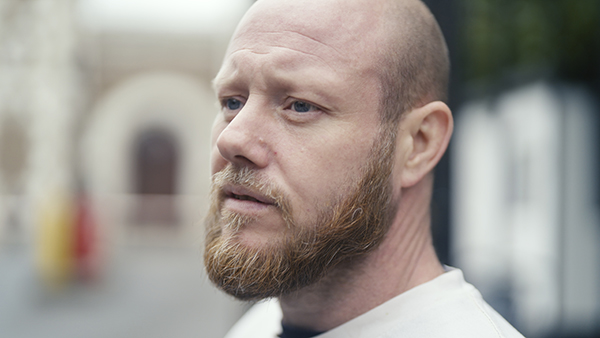
He was standing outside a prison waiting for his stepson to come out.
Three weeks earlier, they had been sharing a cell inside it.
I met him while I was making a documentary about the prison system and the mass early release of prisoners in England. I was interested in what happens at that moment when somebody walks through the prison gates and is suddenly expected to start again.
Where do they go?
Who is waiting for them?
And what exactly are we expecting them to go back to?
The story before the crime
His mother was an alcoholic.
As a child, he learnt very young that if he wanted to survive, he largely had to fend for himself.
That doesn't excuse the things somebody may go on to do. Nor does understanding someone's childhood remove personal responsibility.
But it does make the story more complicated.
We are often introduced to people in the criminal justice system at the point at which something has already gone badly wrong. We hear about the offence, the sentence and the previous convictions.
We don't often hear about the child who came before them.
Yet research from the Ministry of Justice has found strong associations between prisoners' childhood and family backgrounds and later outcomes. Experiences including abuse, being taken into care and exclusion from school have all been associated with a greater likelihood of reconviction.
The wider evidence around adverse childhood experiences tells a similar story. Trauma, neglect, parental substance misuse and unstable family relationships don't predetermine somebody's future. Plenty of children experience terrible things and don't go on to offend.
But childhood matters.
Relationships matter.
What happens when the person who is supposed to look after you can't?
What happens when, instead of being a child, you learn that survival is your responsibility?
And what does that teach you about the world?
Then we send people back into it
Eventually the prison sentence ends.
The gates open and somebody walks out.
We talk a lot about rehabilitation. But rehabilitation requires something to rebuild a life with.
A home would be a useful start.
The Government itself recognises that people leaving prison are the largest group at risk of rough sleeping after discharge from a public institution, and says stable accommodation from the first night is critical to reducing both homelessness and reoffending. People without stable accommodation are far more likely to reoffend.
But standing outside that prison, here was a man living in a van, waiting for his stepson to walk through exactly the same gates he had walked through three weeks before.
Two generations of one family.
The same prison.
For me, that is where this story becomes about more than crime.
It becomes a story about relationships and what happens when they go wrong — sometimes generations before the prison sentence begins.
What have you got to live for?
There was one thing he said that stayed with me.
If you've got nothing to live for, what have you got?
Nothing.
It's an extraordinarily simple way of describing a very complicated problem.
Because perhaps reducing reoffending isn't only about making the consequences of committing another crime sufficiently frightening.
Perhaps we also need to make the alternative sufficiently possible.
Somewhere to live.
Somebody who cares whether you come home.
Work.
Purpose.
A relationship worth protecting.
A reason not to go back.
Research into prisoners' family relationships has found that many people in prison themselves identify family support as important in helping them avoid reoffending.
That feels significant.
Because human relationships can be part of how things go wrong.
But they can also be part of how things begin to go right.
Looking beyond the prison gates
I didn't make this film to argue that people shouldn't be held responsible for what they do.
I made it because I think there is a difference between excusing somebody and trying to understand them.
Documentary filmmaking gives us the luxury of staying with somebody's story for a little longer than a headline does.
Long enough to ask what happened before.
Long enough to meet the mother, the child, the stepfather, the stepson — even when some of those people exist only in the stories being told.
Long enough to see that a person's life is rarely one thing.
He can be somebody who committed a crime.
He can also be the child of an alcoholic mother.
A man living in a van.
A stepfather standing outside a prison.
And the person waiting there so that, when his stepson finally walks through those gates, somebody is there to meet him.
All of those things can be true at once.
Perhaps if we want fewer people to return to prison, we need to become more curious about the lives they are returning to.
And the lives they came from.
What do you think?
How much should someone's childhood and circumstances matter when we think about crime, punishment and rehabilitation?
Does understanding what happened to somebody help us prevent them from offending again — or do you think we risk excusing personal responsibility?
I'd genuinely like to hear what you think. Watch the film and join the conversation in the comments on Relatively Speaking.
Human relationships, honestly told.


