Why the Best Documentary Ideas Often Begin Without Permission
Why the Best Documentary Ideas Often Begin Without Permission
My documentary career began because I saw a photograph of a monk with a long beard, dressed in black robes, drinking wine. It was a small contradiction, but an irresistible one.
I wanted to understand why somebody would choose to leave ordinary life behind and live in a monastery. What were they seeking? What had they left? What did a meaningful life look like from inside that world? So I started calling monasteries.
Beginning before anybody asks
There was no commission, development funding or broadcaster attached, nobody had asked me to make the film.
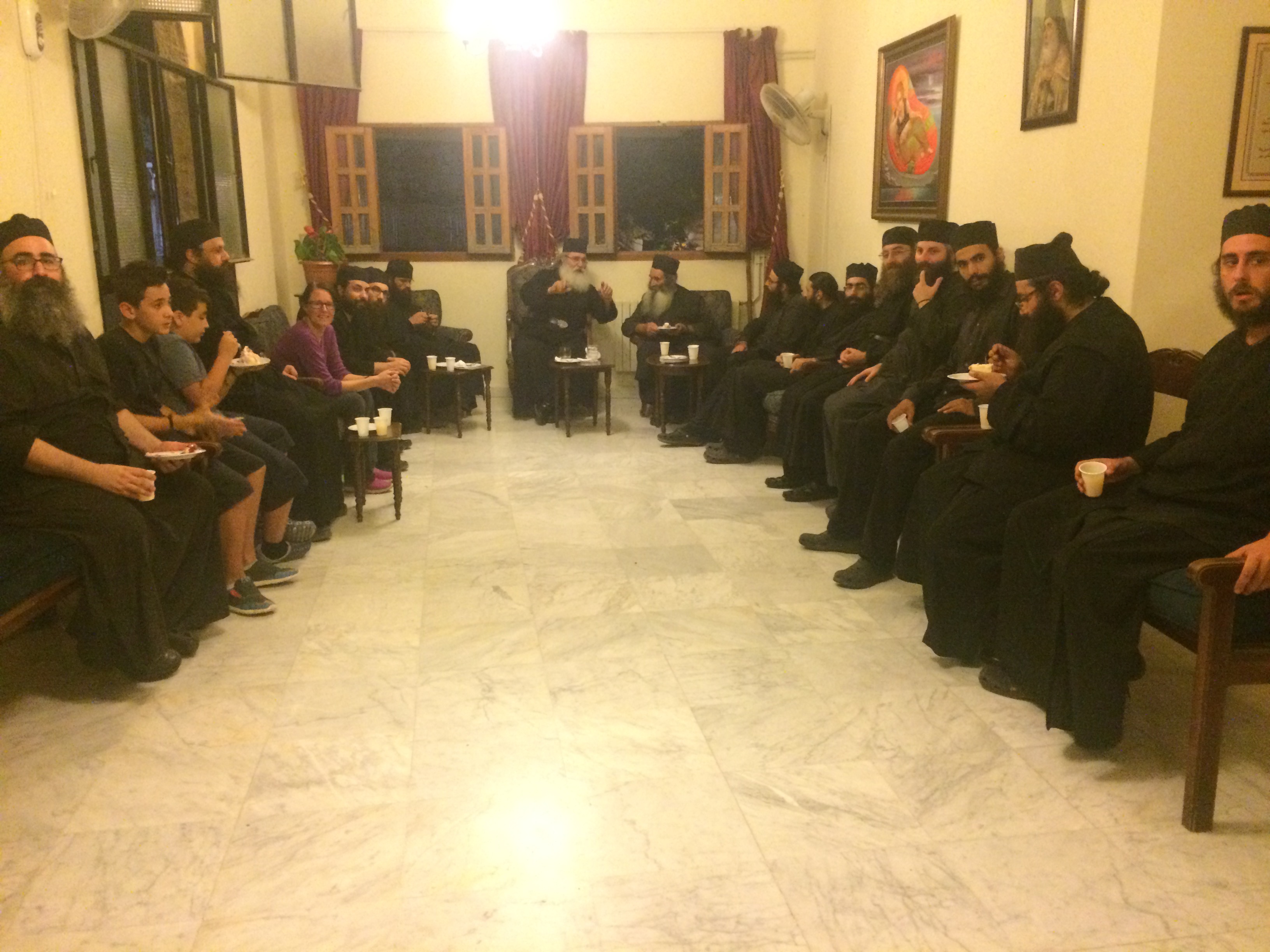
Eventually, a Greek Orthodox monastery in northern Lebanon agreed to meet me. I received special permission to stay overnight and ended up spending around two weeks filming in the Hamatoura Valley, close to the Syrian border.
Getting there involved walking alone up a mountain carrying all my equipment. There is a point halfway up a mountain when a creative calling starts to feel like a deeply avoidable administrative error. But once I arrived, I entered another world.
The monks worked, prayed, cooked and chanted in a church built into a cave. Their voices bounced between the stone walls, the sound was extraordinary.
The moments you cannot plan
One evening, I shared a room with a young Lebanese nun who had recently been expelled from her nunnery. During our conversation, she discovered that I was not religious. She screamed. She had been told never to associate with people like me, which was an excellent beginning to a philosophical discussion between two women sharing a bedroom up a mountain. We ended up talking for hours.
That conversation was not in a treatment, it could not have been scheduled or manufactured. It happened because two people with very different lives found themselves in the same room and became curious about one another.
Those are often the moments documentary filmmaking is really waiting for.
Curiosity before conclusion
I made the film alone and learnt as I went. Later, I took it to Sheffield DocFest, where a BBC executive producer asked me to send it to him.
The Good Struggle was eventually licensed by the BBC, broadcast on BBC Arabic and BBC Our World, and screened at Full Frame Documentary Film Festival in the United States.
It changed my career, but its most important lesson was not about how to secure a broadcast or get a film commissioned. It taught me that curiosity is often enough to begin. A documentary can begin with a face, a sentence, an unanswered question or a contradiction that refuses to leave you alone.
What this means for organisations
The same principle applies when organisations tell stories. Too many films begin with the conclusion already decided. The contributors are then expected to illustrate it. Real people become evidence for an approved message, and the audience can usually feel the machinery behind it.
A more interesting approach begins with genuine curiosity. Who are the people closest to this subject? What relationships shape their experience? Where is the tension, humour or contradiction? What might we discover if we allow them to be more complicated than the brief?
Relatively Speaking uses human relationships to tell bigger stories about the things that matter, finding the people first and allowing their experiences to lead us somewhere truthful.
You do not always need permission to begin looking. Sometimes you simply need to keep calling monasteries until somebody says yes.
Discover more about how Relatively Speaking works with organisations to create documentaries people might genuinely choose to watch through Partner.
Return to Explore to view more articles.


